
Adding a glass of beet or pomegranate juice to your morning routine can modestly lower your systolic blood pressure. Both ruby-red drinks deliver real cardiovascular benefits, but neither beverage replaces your prescribed medications.
Recent clinical trials show each juice reduces systolic readings by roughly 5 mmHg within a few weeks. However, they achieve these heart-healthy numbers through completely different biological mechanisms.
Understanding how dietary nitrates and polyphenol antioxidants work helps you choose the right functional sip for your daily wellness plan.
The Science Snapshot: Nitrates Versus Polyphenols
How Dietary Nitrates in Beet Juice Work
When you drink beet juice, your body absorbs inorganic dietary nitrates through your digestive system. Oral bacteria on your tongue then convert these nitrates into active nitrites.
Your stomach acid and vascular tissues subsequently transform those nitrites into nitric oxide gas; this signaling molecule relaxes vascular smooth muscle, expanding arteries and lowering systemic pressure.
A July 2025 University of Exeter crossover trial in 75 adults demonstrated that this conversion occurs primarily in older adults. Drinking beet juice shifted oral bacteria, increasing Neisseria strains that drive healthy vascular changes.
What the Beet Juice Research Reveals
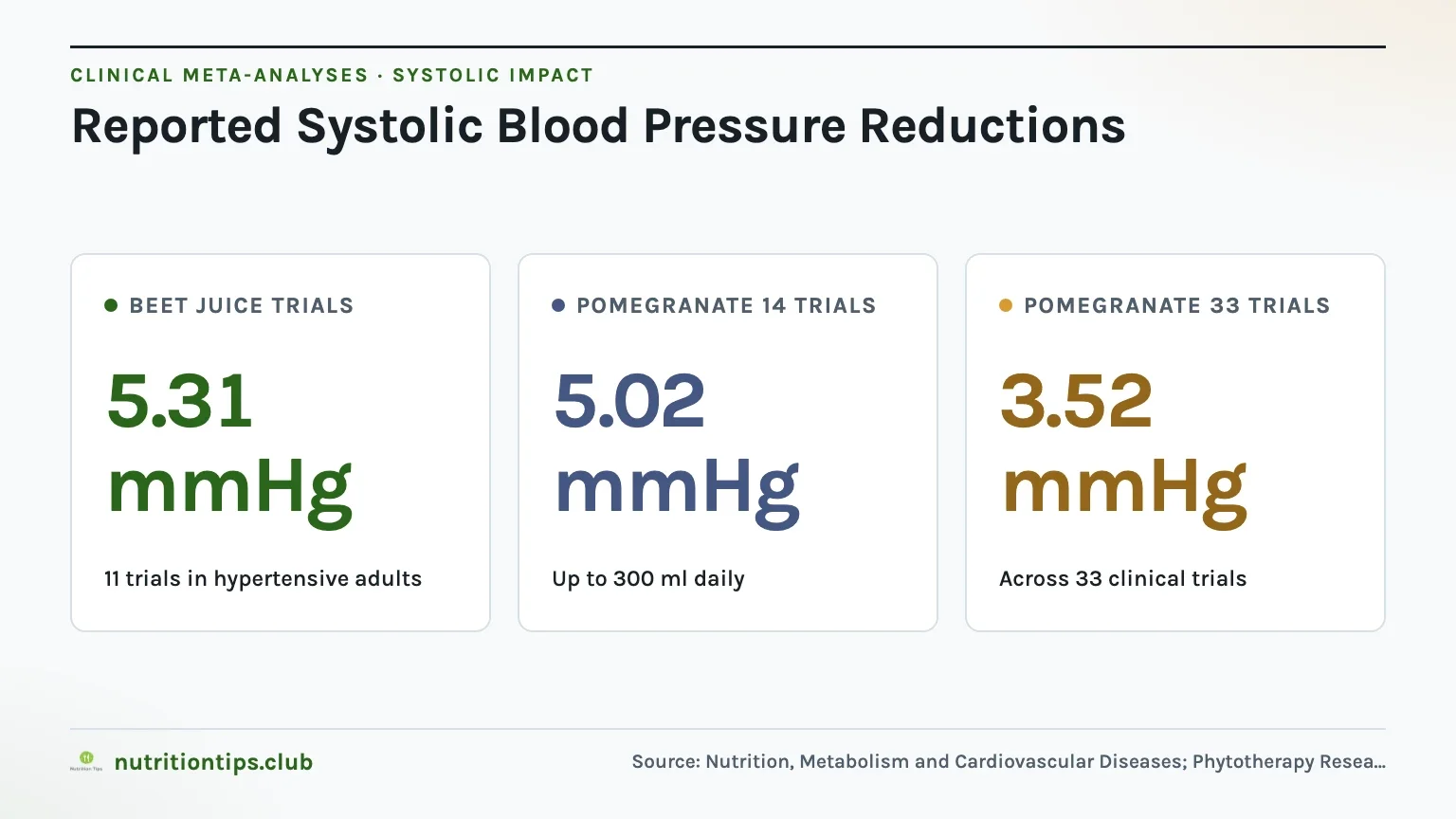
An October 2024 meta-analysis in Nutrition, Metabolism and Cardiovascular Diseases evaluated 11 trials in hypertensive adults. Consuming 200 to 800 milligrams of nitrate daily lowered clinic systolic blood pressure by 5.31 mmHg.
A 2025 meta-analysis in Nutrition Journal across 75 trials confirmed a dose-dependent systolic reduction. However, researchers noted low evidence certainty for beetroot juice and observed no meaningful change in diastolic numbers.
How Polyphenols in Pomegranate Juice Support Vessels
Pomegranate juice works through concentrated polyphenols like punicalagins and anthocyanins that combat cellular oxidative stress. These plant antioxidants shield your circulating nitric oxide from degradation and inhibit angiotensin-converting enzyme activity.
This biological action helps prevent arterial constriction and preserves healthy vascular elasticity over time.
What Clinical Trials Say About Pomegranate Juice
A July 2023 meta-analysis in Phytotherapy Research assessed 14 clinical trials. Consuming up to 300 milliliters daily reduced systolic blood pressure by 5.02 mmHg, though benefits vanished after two months.
An updated June 2026 meta-analysis across 33 trials confirmed a systolic drop of 3.52 mmHg. The study also documented measurable declines in systemic inflammatory markers like IL-6.
Head-to-Head Evidence: The Missing Trial
Scientists have not conducted direct head-to-head clinical trials comparing beetroot juice against pomegranate juice. Claiming that one drink outperforms the other remains entirely unsupported by medical literature.
Both beverages deliver roughly comparable systolic drops of around 5 mmHg in short-term studies. You should weigh their unique botanical compounds, sugar content, and safety profiles rather than seeking a champion.
Practical Realities: Dosing, Quality, and Safety
Commercial Beet Juice Nitrate Variations
Replicating clinical trial results from grocery store shelves presents unexpected hurdles. Testing by Gallardo and Coggan revealed a staggering 50-fold variation in nitrate concentrations across 24 commercial beet products.
Only five of 24 brands consistently delivered five millimoles or more of nitrate per serving. Additionally, clinical doses of 200 to 800 milligrams frequently exceed the World Health Organization acceptable daily intake.
Pomegranate Drug Interactions and Natural Sugars
The American Heart Association cautions that pomegranate juice interacts with blood pressure medications, statins, and warfarin. Pomegranate compounds inhibit cytochrome P450 liver enzymes, altering how your body metabolizes vital pharmaceuticals.
You must also monitor the natural sugar density in pure fruit juices. An eight-ounce pour contains over 30 grams of carbohydrates, which can complicate blood sugar management if you live with diabetes.
Understanding the 2025 Blood Pressure Guidelines
The 2025 ACC/AHA guidelines maintain that hypertension begins at 130/80 mmHg. Lowering systolic pressure by five points offers meaningful cardiovascular protection, but it does not cure underlying vascular disease.
According to CDC data, 48.1% of American adults have high blood pressure, yet only 22.5% keep it controlled. Hypertension contributed to 680,179 deaths in 2024, proving you cannot rely solely on functional juices.
The updated guidelines recommend using the race-free PREVENT risk calculator to guide therapy. For lower-risk adults in Stage 1 hypertension, clinicians advise three to six months of dedicated lifestyle changes first.

Four Strategy Pillars for Sustainable Cardiovascular Wellness
1. Nutrition: Build a Diverse Nitric Oxide Plate
You do not need to rely exclusively on bottled juices to support vascular function. Whole greens like arugula, spinach, and celery provide abundant dietary nitrates alongside dietary fiber without concentrated liquid sugars.
Roasting or steaming fresh beets preserves their natural dietary nitrates while delivering healthy plant fiber. Whole vegetables slow digestion, offering steady vascular support without causing rapid surges in blood glucose.
Avoid antibacterial mouthwash after consuming nitrate-rich foods. Harsh antiseptic rinses eradicate beneficial oral bacteria like Neisseria that are essential for transforming dietary nitrates into vasodilating nitrites.
2. Movement: Pair Daily Sips with Aerobic Conditioning
Physical activity stimulates endothelial nitric oxide production, reinforcing the benefits of your dietary intake. Moderate aerobic exercises like brisk walking, swimming, or cycling naturally encourage arterial walls to relax.
Drinking beet juice two to three hours before a workout may support exercise stamina. This synergy helps you maintain regular training routines that build lasting cardiovascular resilience.
3. Mindset: Cultivate Consistency Over Miracle Cures
Cardiovascular health requires steady daily habits rather than short-lived dietary fixes. Viewing functional beverages as enjoyable wellness rituals prevents frustration and keeps your expectations grounded in clinical reality.
Track your home blood pressure readings under identical conditions each morning. Objective records allow you to evaluate how comprehensive nutrition and lifestyle modifications influence your long-term cardiovascular baseline.
4. Lifestyle Habits: Protect Your Sleep and Manage Stress
Chronic sleep deprivation and persistent stress stimulate your sympathetic nervous system, causing blood vessels to constrict. Even the most antioxidant-dense beverage cannot overcome the cardiovascular damage of chronic exhaustion.
Prioritize seven to eight hours of sound nightly sleep and incorporate daily stress reduction practices. Restorative habits provide the physiological baseline your blood vessels require to maintain healthy tone.

Clinical Perspectives: What Healthcare Professionals Emphasize
Cardiologists and registered dietitians frequently encounter patients who hope grocery store drinks can replace their prescribed antihypertensive therapies. Clinicians emphasize that a five-point systolic drop represents meaningful progress, yet rarely normalizes stage 2 hypertension alone.
Dietitians recommend starting with modest four-ounce portions to assess digestive tolerance. Beet juice can cause harmless red discoloration of urine or stool, while excess pomegranate juice may trigger mild stomach cramps.
Clinicians also highlight budget-friendly alternatives for long-term health. Whole beets, frozen pomegranate seeds, and leafy greens deliver identical vascular compounds at a fraction of the price of branded extracts.
Frequently Asked Questions About Blood Pressure Juices
Can I drink beet juice and pomegranate juice together?
Yes, blending small amounts of both juices provides complementary vascular nutrients. You receive dietary nitrates for acute nitric oxide conversion alongside diverse polyphenols that reduce oxidative stress.
Keep your combined daily serving to four ounces to avoid excessive sugar intake. This balanced portion ensures you stay within reasonable dietary nitrate and carbohydrate boundaries.
How quickly do these juices lower blood pressure?
Beet juice begins relaxing blood vessels within two to three hours as nitrite concentrations peak in your circulation. Maximum systolic reductions usually appear between three and six hours post-ingestion.
Pomegranate juice acts more gradually by reducing vascular inflammation and oxidative stress over several weeks. Most clinical trials observe blood pressure benefits after four to six weeks of consistent daily consumption.
Will drinking these juices replace my blood pressure medication?
No, you should never stop or reduce prescription antihypertensive drugs without consulting your prescribing physician. Modest dietary reductions of roughly 5 mmHg cannot match the targeted clinical power of pharmaceutical treatment.
Treat these functional beverages as complementary lifestyle additions rather than medical substitutes. Your physician can monitor your readings and safely modify prescriptions if your lifestyle habits lower your overall numbers.
Which juice is safer if I have kidney concerns?
Both juices supply high potassium concentrations, requiring close medical supervision if you have chronic kidney disease. Beetroot also contains high levels of oxalates, which can promote kidney stones in vulnerable individuals.
Consult a registered dietitian before introducing concentrated botanical drinks if you have renal health concerns. Whole vegetables with lower oxalate profiles often provide safer alternatives for your kidneys.
Your Action Step for This Week
Select one functional beverage to test over the coming week rather than revamping your entire diet at once. Buy a bottle of 100% pure pomegranate juice or an organic beetroot shot to evaluate flavor and tolerance.
Enjoy a modest four-ounce serving alongside breakfast on three alternating mornings. Track your blood pressure before drinking and three hours later to observe how your vascular system responds.
Bring that tracking log to your next medical appointment to collaborate with your healthcare team on sustainable heart health strategies.